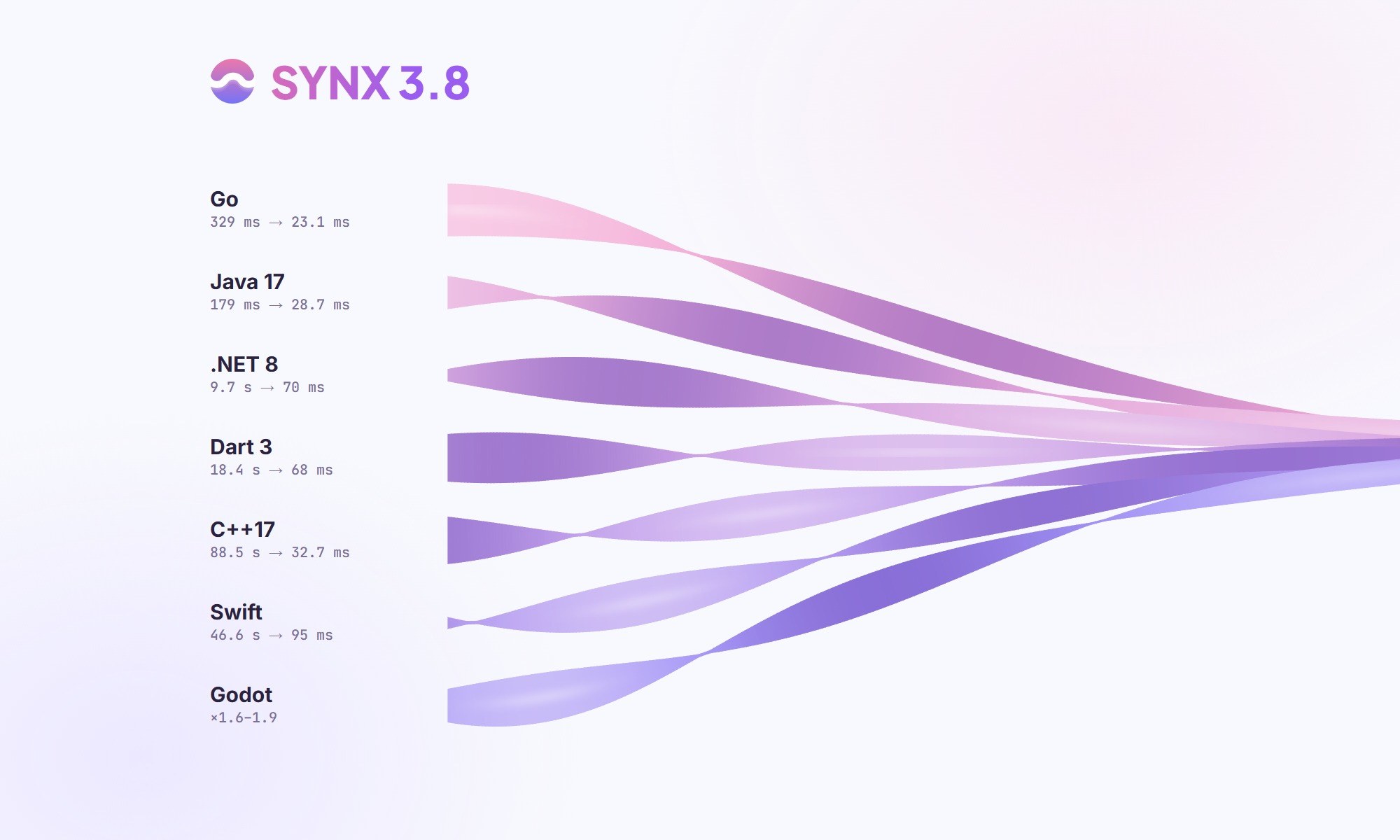
We sped up the entire platform, and yes, we brought receipts
We spent the second half of October chasing pauses instead of new features: anywhere the platform made you wait, we started a stopwatch and cut what was in the way. The next track in Resonance now starts in 46 milliseconds, long ASAI chats open almost three times faster, and Discover pulls about a quarter of the data it used to.
by APERTURESyndicate · October 29, 2026

Be honest, you’ve done it too: hit “next” in Resonance and then watched the track think about it. We sat there the same way. A second, sometimes two, and every time a little embarrassing, because it’s our player and we listen to it every day.
So the second half of October went into a big audit. We opened every product with a stopwatch and looked for the places where you wait for no good reason: an extra request to the server, an image five times bigger than the screen needs, code that downloads even though you’ll never open it. That added up to more than seventy fixes. Below is what you’ll actually feel, with numbers, because “it’s faster now” without numbers sounds like an energy drink ad.
Resonance
That “next” used to take anywhere from 0.4 to 2 seconds, and now it takes 46 milliseconds, which is faster than you can lift your finger off the key. After a page reload, Space starts the music in about 67 ms.
The trick is that Resonance now thinks one step ahead. While you scroll the home page, it gets the audio ready for the tracks you can see, and the moment your mouse lands on a row, the link to the sound is already in its pocket. A catalog track that used to hesitate for almost two seconds on the first click now starts in 0.45. Your own tracks from the cloud start right away too.
Switching tracks no longer jolts the interface: the home page doesn’t redraw itself from scratch, Chroma colors flow into the new cover without a stutter, and the progress bar glides. If your internet drops, the app doesn’t fall apart when you switch screens, it just tells you straight with a “no connection” badge.
And one more: we caught and squashed the bug that sometimes froze the gapless transition at 0:00 at the end of a track. If that ever happened to you, it wasn’t your hardware, it was us. Our bad.

ASAI
Here the main villain was long chats. A 320-message roleplay used to lay out its entire history at once when you opened it, and your phone went off to think for 12.6 seconds. Now ASAI draws the latest messages first and slides the rest in while you read, so the same chat opens in 4.6 s. Scroll up and the earlier messages arrive in chunks, without the screen jumping around.
Discover lost almost three quarters of its weight. A tiny avatar used to receive a full-size portrait of up to 1.7 MB, and now it gets a picture sized exactly for its spot, so instead of 10.6 MB the page pulls 2.8. Your portraits and covers no longer download again on every visit, and that was about 4 MB a pop. The startup code got a quarter lighter, from 886 to 644 KB: the code and formula editors only arrive when you open them, and the interface no longer downloads every language at once.
Among the small things you feel the most: the model’s reply renders more smoothly, because finished paragraphs no longer get rebuilt on every new word, and the browser’s Back button doesn’t restart ASAI from scratch.

Apeiron
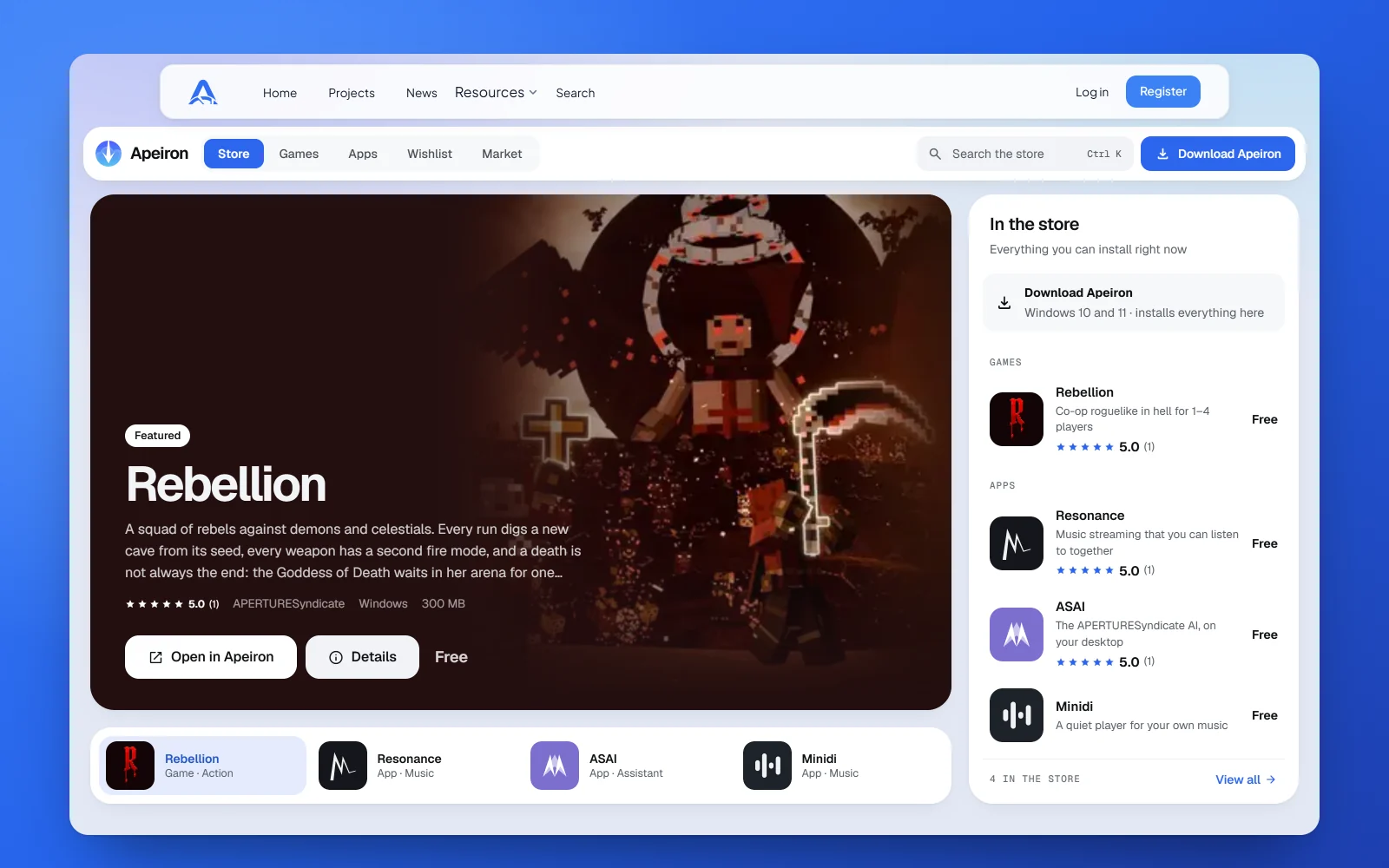
Apeiron’s web storefront dropped some weight. Its icon font weighed 217 KB even though barely a fifth of it was used, and now it’s 51 KB. Images come in WebP, the product and inventory page styles load only where they’re needed (that’s a quarter less CSS on the storefront), and moving between sections no longer reloads the page.
In the launcher itself, downloads got faster: game chunks come from the server closest to you, a slow connection no longer kills a download halfway through, and unpacking runs on every core of your CPU.
Rebellion
Rebellion 0.9.15 came out as a pure speed patch. The first floor loads in 3 seconds instead of 4.2, the first Tab opens in 25 ms instead of 175, and the heaviest frames at the start of a run got almost twice as light. A horde of three hundred demons now eats 6 ms of CPU per frame instead of 11, so you die to demons, not to freezes.
The game’s website got tightened up too: the hero’s 3D model assembles piece by piece without freezing the page, and the fonts, images and scene code all slimmed down.

The site and everything around it
The navbar that sits on every one of our sites stopped asking the server the same thing twice and no longer drags its animations (about 40 KB) into the startup code; they load after the first frame. Profiles on aperturesyndicate.com open right away: the banner, avatar and name show up without waiting for the blocks from Resonance, ASAI and the other services, which catch up a moment later. Icons and images on the main site, Etherane, Creators and Subscriptions now stay in your cache for a day, so a repeat visit doesn’t download them again. Ventor and the developer portal pages arrive pre-built, and Upscale in Ventor now enlarges a picture to 67 megapixels in 3.4 seconds instead of 12.
Under the hood we also updated the engine on all fifteen sites and went back over how the platform handles your accounts and data. We won’t go into detail: security is like a good goalkeeper, nobody notices it as long as it’s doing its job.
If something still feels slow for you, tell us through support. We haven’t put the stopwatch away yet.